From Low-Performance Plastics to Low-Carbon Plastics – Deputy Director Chia-Lun Kuo, National Atomic Research Institute
From Low-Performance Plastics to Low-Carbon Plastics
Deputy Director Chia-Lun Kuo, National Atomic Research Institute
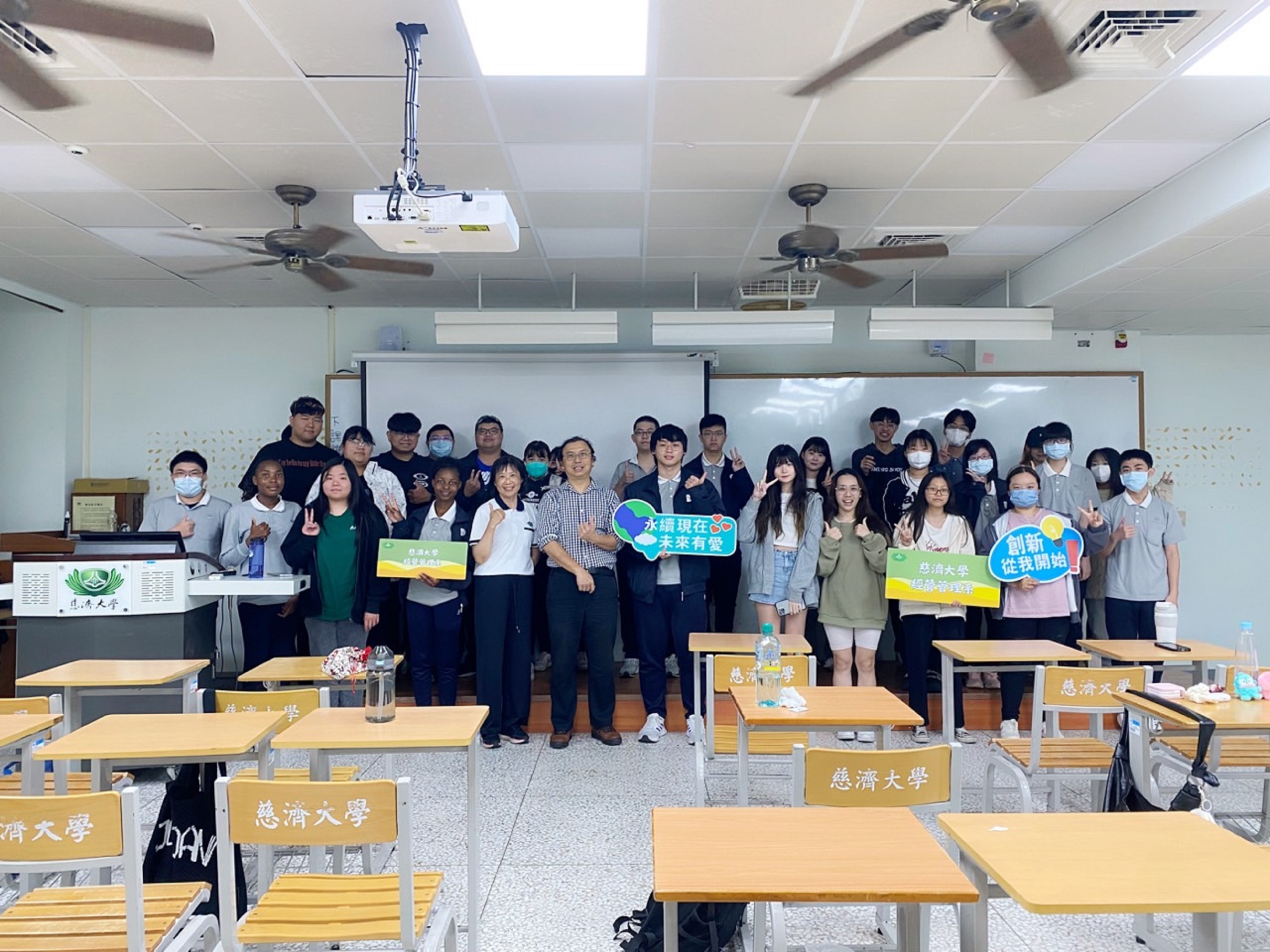
On May 14, 2025, the Department of Business Management at Tzu Chi University held a lecture titled "From Low-Performance Plastics to Low-Carbon Plastics" as part of its Green Marketing course. The event featured Deputy Director Chia-Lun Kuo from the National Atomic Research Institute, who shared strategies for reducing carbon emissions in plastic production.
Deputy Director Kuo began by addressing the Great Pacific Garbage Patch—a massive floating accumulation of waste, primarily plastics, carried together by ocean currents. Over time, these discarded plastics break down into microplastics, contributing to widespread pollution. He emphasized that this crisis is no accident: global plastic production has skyrocketed since 2000, yet inadequate recycling systems and low environmental awareness have allowed pollution to escalate unchecked.
Why Is Plastic Pollution a Critical Issue?
Plastics do not fully degrade; instead, they fragment into microplastics, which spread through ocean currents and even the air. These particles have infiltrated marine ecosystems, rivers, mountains, and even the food we consume. When ingested, microplastics can cause irreversible harm to human health, including links to dementia, cancer, depression, and cellular damage.
Global Solutions: The UN Plastic Treaty
To combat this crisis, the international community is negotiating a Global Plastics Treaty, aiming to curb plastic waste and promote sustainability. Key strategies include:
- Reduction & Substitution – Minimizing single-use plastics (e.g., food packaging, shampoo bottles) and promoting low-waste alternatives.
- Design Innovation – Developing safer, longer-lasting plastics with improved reusability, repairability, and recyclability.
- Circular Economy Transition – Boosting recycled plastic use and establishing closed-loop systems where waste becomes a resource.
- Policy Reform – Strengthening waste management laws to incentivize recycling and reduce plastic pollution.
Student Perspectives & Engagement
During an interactive session, students shared insights:
1. Wei-Hua Ren (Business Management Class 2A) argued that bioplastics from corn are impractical due to high costs compared to petroleum-based plastics.
2. Ming-Yi Liu (Business Management Class 2A) noted challenges in sourcing wood-based fibers, citing low recycling rates in Taiwan.
3. Ming-Jie Pan (Business Management Class 2A) suggested higher taxes on plastics to deter excessive use and fund sustainability initiatives.
Conclusion: A Call to Action
This lecture deepened students’ understanding of plastic pollution’s threats—from environmental damage to health risks—and highlighted the urgent need for sustainable solutions. Armed with this knowledge, the next generation can drive meaningful change in tackling one of our era’s greatest challenges.
Supported by Higher Education Sprout Project, Ministry of Education
|
|

|
|
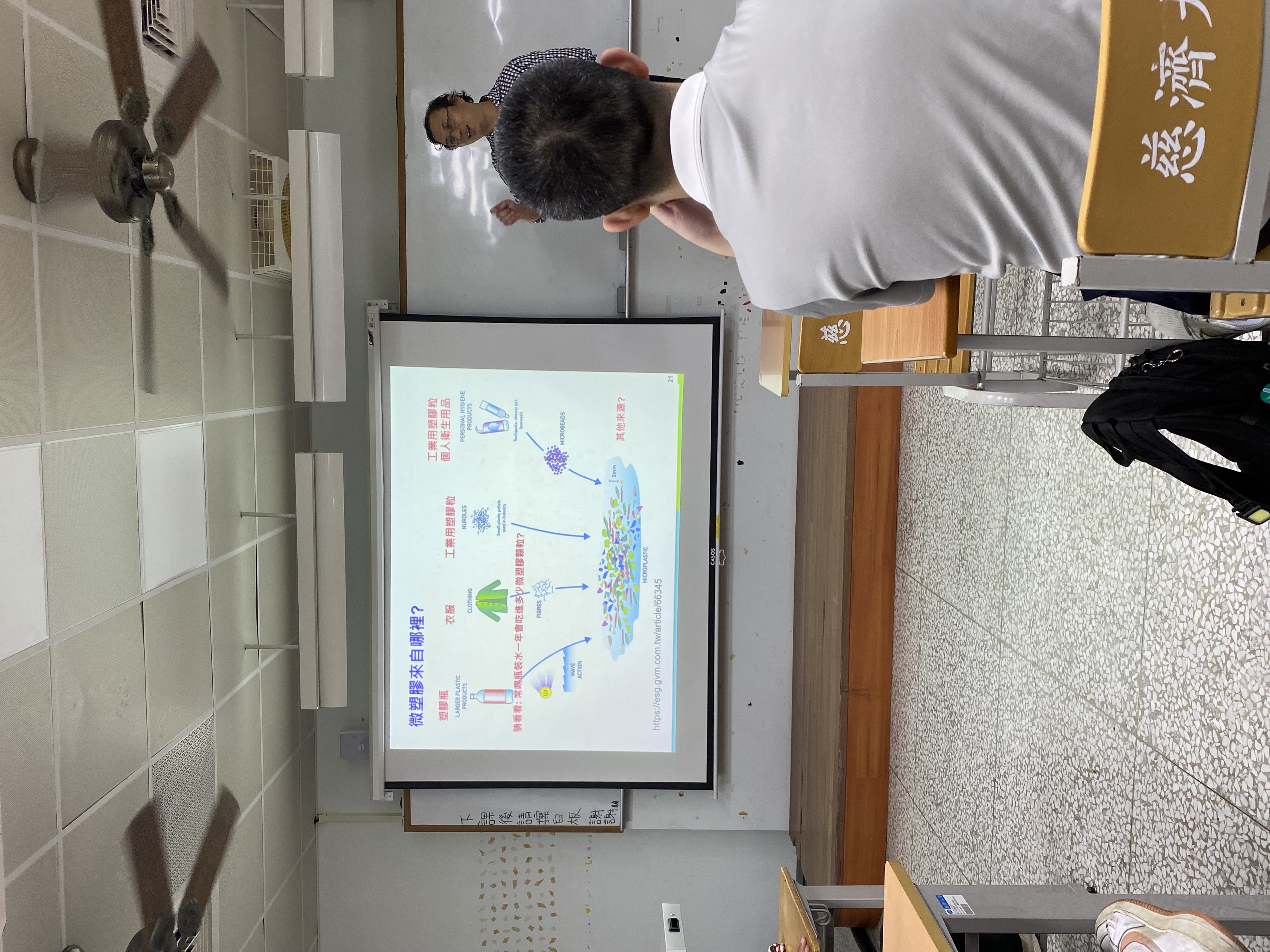
The lecturer explained the sources of microplastic pollution.
|
|
|

|

|
|
Students attentively engaged with the lecture content.
|
The instructor presented the concept of a closed-loop circular economy.
|
|

|

|
|
The speaker introduced low-carbon plastic circular utilization methods.
|
Classmates discussed their individual ideas.
|